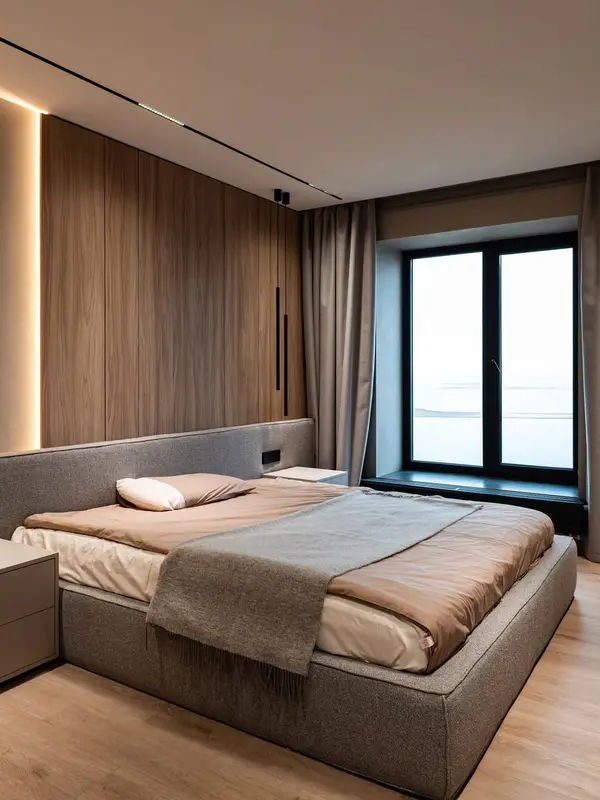
What solid timber does well
Solid timber has depth, repairability and natural variation, but it must be detailed to accommodate movement. Its useful qualities include a surface that can age well and repair and refinishing potential.
Solid timber has depth, repairability and natural variation, but it must be detailed to accommodate movement.
The right decision connects appearance with construction and maintenance. For projects in Peñíscola, we also check the actual light, access and conditions in the room.
Solid timber has depth, repairability and natural variation, but it must be detailed to accommodate movement. Its useful qualities include a surface that can age well and repair and refinishing potential.
We consider it for wardrobes, kitchens, living-room furniture and commercial work when its character supports the brief rather than leading it.
Seasonal movement and variation between boards should be discussed before drawings or samples are approved.
Strong edges and details and individual grain and colour can be balanced with simpler surfaces, so the finished room is coherent rather than overworked.
We compare realistic alternatives and explain what changes in construction, upkeep and price. You are not expected to specify solid timber unaided.
Cleaning, light exposure, moving parts and local repair are considered so the choice still makes sense after years of use.
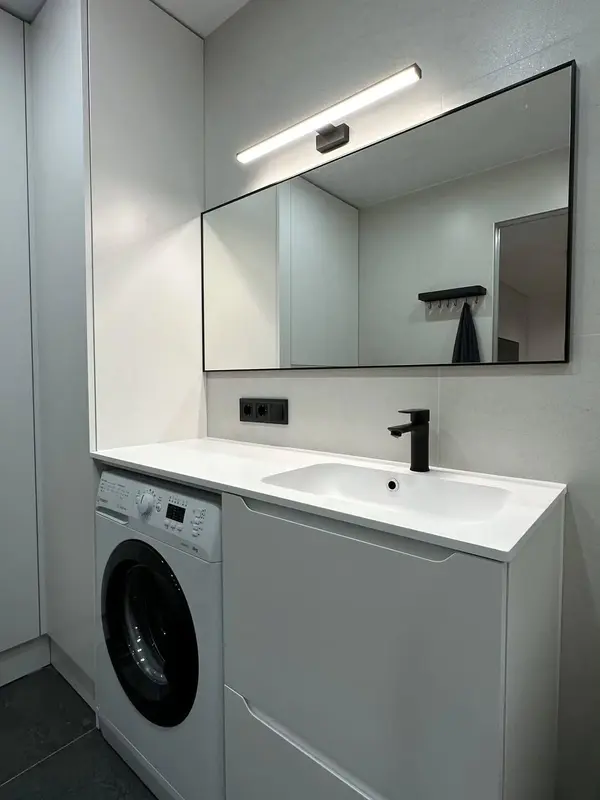
We do not begin with a catalogue code. The space and the job of the furniture determine where this approach is useful and where another solution would be more honest.
Existing floors, doors, wall colours and daylight set the context. A surface that can age well may look very different beside warm stone, cool tiles or strong coastal light.
Repair and refinishing potential can be the right focus, while less visible areas use a simpler material. This often improves both performance and budget control.
Edges, handles, shadow gaps, glass, lighting and adjacent panels are resolved with the material. A finish cannot be separated from the detail that contains it.
Variation, sheen and texture are discussed before production. If natural materials are involved, we also agree what degree of variation should be expected.
The point about seasonal movement is not a reason to reject the option, but it should shape where and how the approach is used.
The first conversation is deliberately plain. What is awkward now? What needs to be easier? Once those answers are clear, a surface that can age well becomes a useful design constraint rather than another item on a wish list.
A surface that can age well deserves more than a note in the margin. Its position changes adjacent dimensions, the rhythm of the front and, sometimes, the hardware hidden behind it.
We pause when a choice depends on perfect walls, perfect lighting or unusually careful daily use. Real homes in Peñíscola rarely offer all three, so the detail has to tolerate ordinary life.
We bring the decision back to the property: floor, wall, daylight and the objects that will stay. A good sample should belong to that group, not merely look impressive on its own.
The budget conversation is easier when each upgrade has a job. More money may be worthwhile for individual grain and colour; it may add very little in an interior surface that is rarely seen or touched.
The final metre through the property can be the most restrictive. For a project in Peñíscola, we connect access, module size and visible joints before anything is cut.
The address in Peñíscola adds useful context. We may be working with old-town properties, hillside homes and apartments near the coast; the measured property then decides which of those considerations genuinely applies.
A clean elevation is only useful if it can reach the room. We connect narrow or stepped access with packaging, lifting, protection and the sequence of fitting.
Irregular walls affects how colour, sheen and grain read after installation. Samples are compared beside the floor, walls and lighting that will remain.
Sea exposure and careful module sizing are discussed with the use of the furniture. That keeps a visually attractive idea from creating awkward cleaning, inaccessible services or a difficult fitting sequence.
Where colour, texture or sheen is important, a representative physical sample is the useful reference. Screens and showroom lighting can be misleading.
No. It depends on the use, room conditions, desired appearance and budget. We may recommend it only for selected faces or combine it with a more practical supporting material.
Photographs, approximate dimensions, intended use and one or two references are enough. We will then ask for the information specific to the material or style.
Sometimes, but position and construction matter. Moisture, heat, cleaning and edge exposure must be checked before we confirm the specification.
Con unas fotos, medidas aproximadas y una idea de uso podemos preparar una primera orientación antes de concertar la medición.